
When I began my fellowship this Summer, I bought myself a bike and began using it for the commute between Downtown and Allston. I usually follow the Esplanade for a decent part of the ride, and travel the edge of the Boston Commons until I enter Downtown. Having the luxury of a bike and given the proximity of Downtown to a variety of sites, my Summer has been and likely will be an ongoing acquaintance with the many places surrounding VLP’s headquarters. In just a short distance, I can arrive at Rose Wharf or travel just a little further to Faneuil Hall or the North End. This evening a friend has been gracious enough to take me to a show in the Theater District where we’ll enjoy one of the many restaurants peppered throughout its venues. With its dense history, Boston can be the ideal place to explore. However, one part of its thriving cultural center is seeing ongoing threats to its very existence.
According to one study by the Asian American Legal Defense and Education Fund (AALDEF), Chinatowns across the East Coast are rapidly disappearing. In fact, between 2000 and 2010, although Asian Americans still constituted the majority population in Boston’s Chinatown at that time, census data indicate that the population of white residents in the neighborhood doubled. This is likely attributable to the increase of non-family households living in group share quarters and signifies a common trend of students and young professionals flocking into the city as a result of universities increasing their overall presence. Furthermore, the census data do not account for variations within the Asian American community in which there are often dramatic differences between individual sub-populations. In other areas of the city, different universities also continue to infringe upon communities that have historically consisted predominantly of People of Color. While the expansion of universities poses one of the most present and immediate threats to these communities, Boston has been no stranger to housing issues before this.
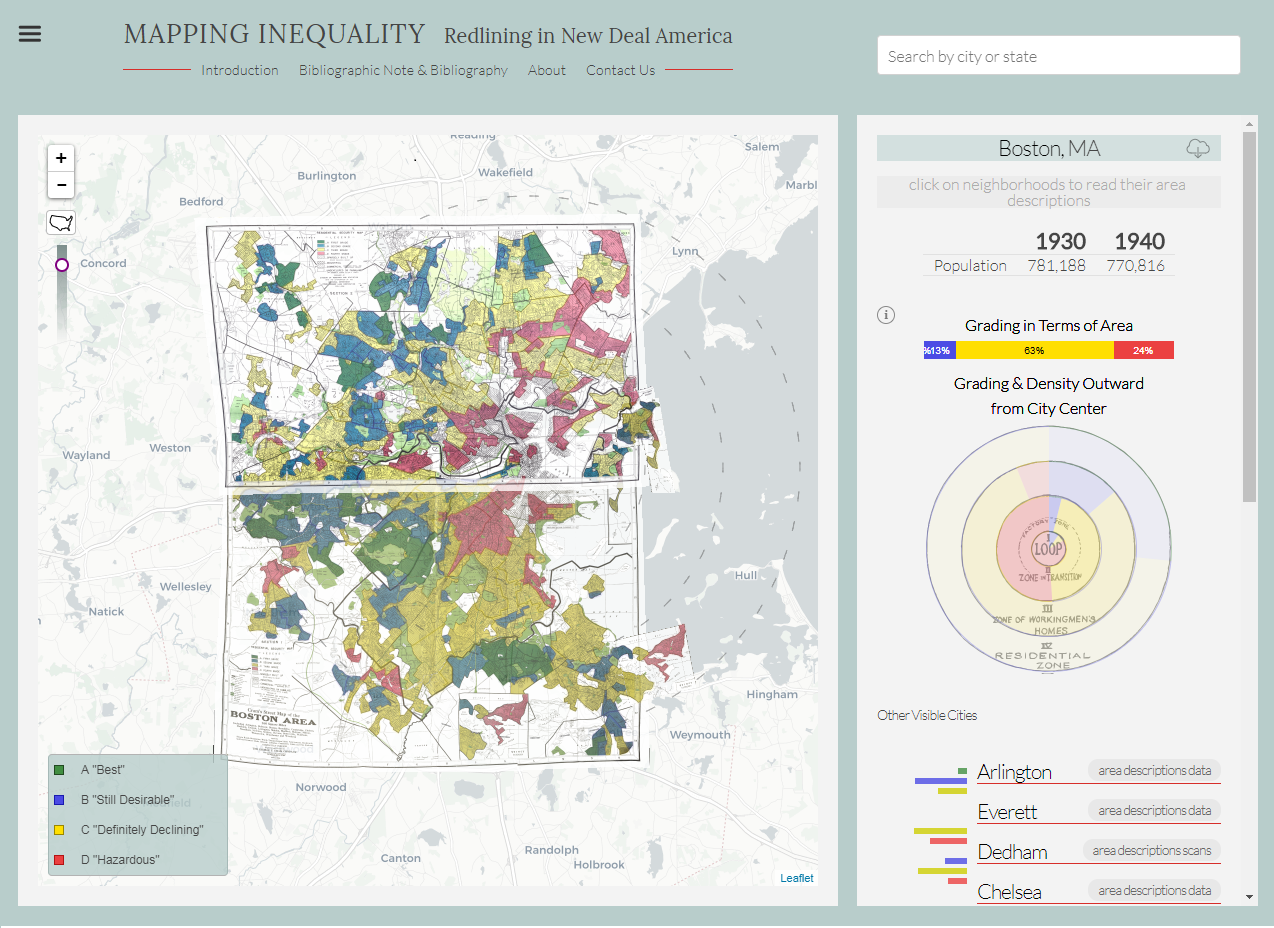
The current racial stratification of the city can be heavily traced to discriminatory housing policies in the past. Chinatown, as well as predominantly Black and Latino communities throughout Boston, are largely the result of residential segregation and other obstacles that have manifested from its existence. Based on compiled evidence about low-income populations in Boston in the early 2000’s, Nancy McArdle writes:
…even within the poverty population, blacks, Hispanics, and some Asian sub-groups experience the added challenge of residing in neighborhoods of concentrated poverty… Not only do poor blacks and Latinos more commonly reside in areas of concentrated poverty, but they are three times more likely than poor whites to live in what can be described as “severely distressed” neighborhoods–those with much higher than average shares of single-female-headed households, high-school drop outs, people in poverty, and males detached from the labor force.
Although almost two decades have passed, and Boston has taken some steps to mitigate the ongoing gentrification, the overall trend has been towards an increased presence of White affluence—maybe best exemplified by another nearby landmark: the Seaport.
Recognizing the increasingly alarming racial homogeny of the city, it is obvious Boston needs a wholesale buy in from all major stakeholders to begin to address the problem. From developers to organizers, prospective homeowners to those facing chronic homelessness—Boston needs their help in overcoming its sordid past. It is at this intersection that human-centered legal design, legal technology, and legal professionals perhaps hold the most potential. Lawyers are involved with each of these parties, whether through direct representation, policy research, or the creation of legal assistance tools. Furthermore, lawyers have the unique capacity to approach these issues with knowledge of both the legal field and the systemic issues that have influenced its creation.
While most efforts to repair the housing market have viewed these stakeholders as opposing forces, and thus oriented towards different goals—it seems that all have a vested interest in the development of more housing. By focusing on this singular goal, and using human-centered legal design as a catalyst, the proper amount of resources and mediation may yield a more successful result. Obviously, the task is daunting, but Boston needs to reckon with its past while trying to appease ongoing development in the city—otherwise it is doomed to repeat itself.