
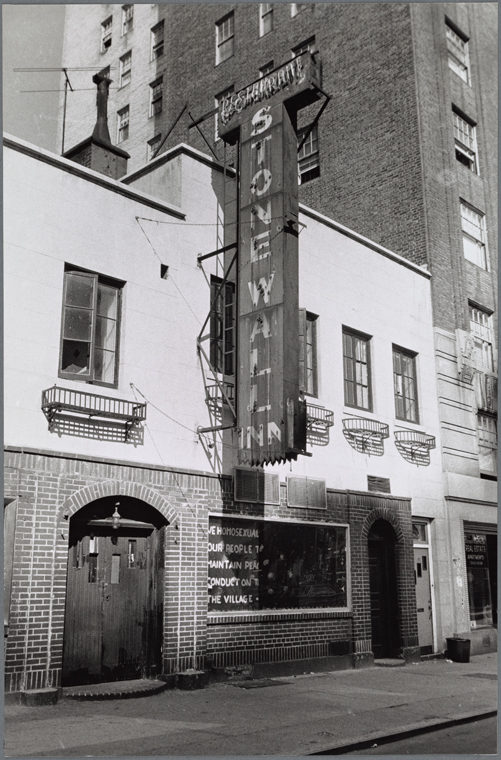
Continuing my theme of “grasping things at the root,” this week’s blog is dedicated to exploring the portion of the Lesbian, Gay, Bisexual, Transgender, and Queer (or Questioning) (LGBTQ) community that has historically stood on the frontlines of both adversity and resistance. While the Stonewall Inn currently stands as a recent dedication to the “struggle for civil rights in America” it was once a focal point of legally sanctioned violence against the Queer and Transgender community, specifically those that were people of color and low-income youth. In general, adverse court decisions have a disproportionate effect on the LGBTQ community. Today, in the wake of several Supreme Court decisions that will likely ripple throughout the LGBTQ community for years to come, it seems just as, if not more, important to heed the example of activists like Sylvia Rivera or Marsha P. Johnson; we must work to prioritize the most disenfranchised among us. With pride parades featuring large corporate sponsors like Bank of America, Uber, or Apple, it’s easy to believe the LGBTQ community has neared its end goals, but when considering the roots, we have so much further to go.
Despite accounting for approximately 10% of the overall youth population, LGBTQ individuals make up about 40% of youth that are homeless. In addition to their disproportionate representation, and adding to their increased risk of homelessness, these youth face heightened rates of family rejection, mental health issues, and abuse by a family member. Once homeless and due to a lack of adequate resources, LGBTQ people are more likely to engage in sex work for means of survival (i.e. shelter, food, etc.), and subsequently become increasingly at risk for sexual violence or the spread of sexually transmitted diseases. At shelters, sometimes the only immediately available resource, LGBTQ youth face risks of harassment by their peers and a lack of cultural competence among staff. Of those affected by these issues, Transgender youth that are homeless are considered particularly at risk for poor mental and physical health in comparison to their peers, and in alignment with these grim statistics, LGBTQ homeless youth remain at an alarming risk for attempted suicide.
As one of the largest suppliers of pro bono legal services in Massachusetts, I wondered what steps the Volunteer Lawyers Project (VLP) has taken to be more inclusive towards LGBTQ youth. I sent out an email inquiring about ongoing initiatives, both internal and external, and I received a resounding response. Among other things, VLP board member Josephine McNeil is collaborating with local legal aid services and programs specifically for people who are homeless to better address the needs of LGBTQ youth. She is a participant in an ABA working group for youth homelessness and pushes for further recognition of the disproportionate representation these individuals experience among homeless populations, and the necessity for catering services to their specific needs. Further, she is the Chairperson of the Homeless Youth Task Force, a subcommittee of the Civil Rights & Social Justice Council. Under Josephine’s guidance, VLP is actively exploring how to better increase the cultural competency of their services in regards to LGBTQ identity.
Internally, VLP is just as dedicated to reinforcing the social change they hope to employ outwardly. Staff members are active participants of an LGBTQ listserv that operates through the MassProBono website, and were more than willing to provide helpful feedback for how the site may better operate. As a result, I will be performing an audit of the website to ensure that all services relevant to LGBTQ youth are listed—not just organizations exclusively dedicated to LGBTQ youth but also those that have taken steps to be more inclusive. Members of the staff also suggested steps for increasing the overall competency of the staff and volunteers. Lastly, I will likely attempt to sift through each of the resources (interview guides and checklists) to ensure they adequately address the intersectional needs of LGBTQ individuals, and will keep track of my efforts for future staff to potentially replicate.
In a country where discrimination in employment and housing are still a tangible reality for LGBTQ individuals, it’s a warm reminder to see an organization actively taking steps to ensure their services go beyond the norm. As a white, gay cisgender man I am less likely to experience discrimination or similar obstacles than my Transgender and LGB peers of color, but it does not reduce the gratitude I feel for having the opportunity to work within an organization that values my community. The world at large may not quite be where they need to be in terms of addressing all of the ongoing legal needs of a marginalized community, but that doesn’t stop VLP from working ahead of the curve. To read more about how and why LGBTQ youth are more susceptible to instances of temporary and chronic homelessness, as well as other obstacles, please click here. If you’d like to be more involved in LGBTQ issues in your area, consider taking a look at many of the organizations that provide direct services!